IT Band Syndrome Recovery in Sacramento, CA
The Ache That Keeps Ending Your Runs
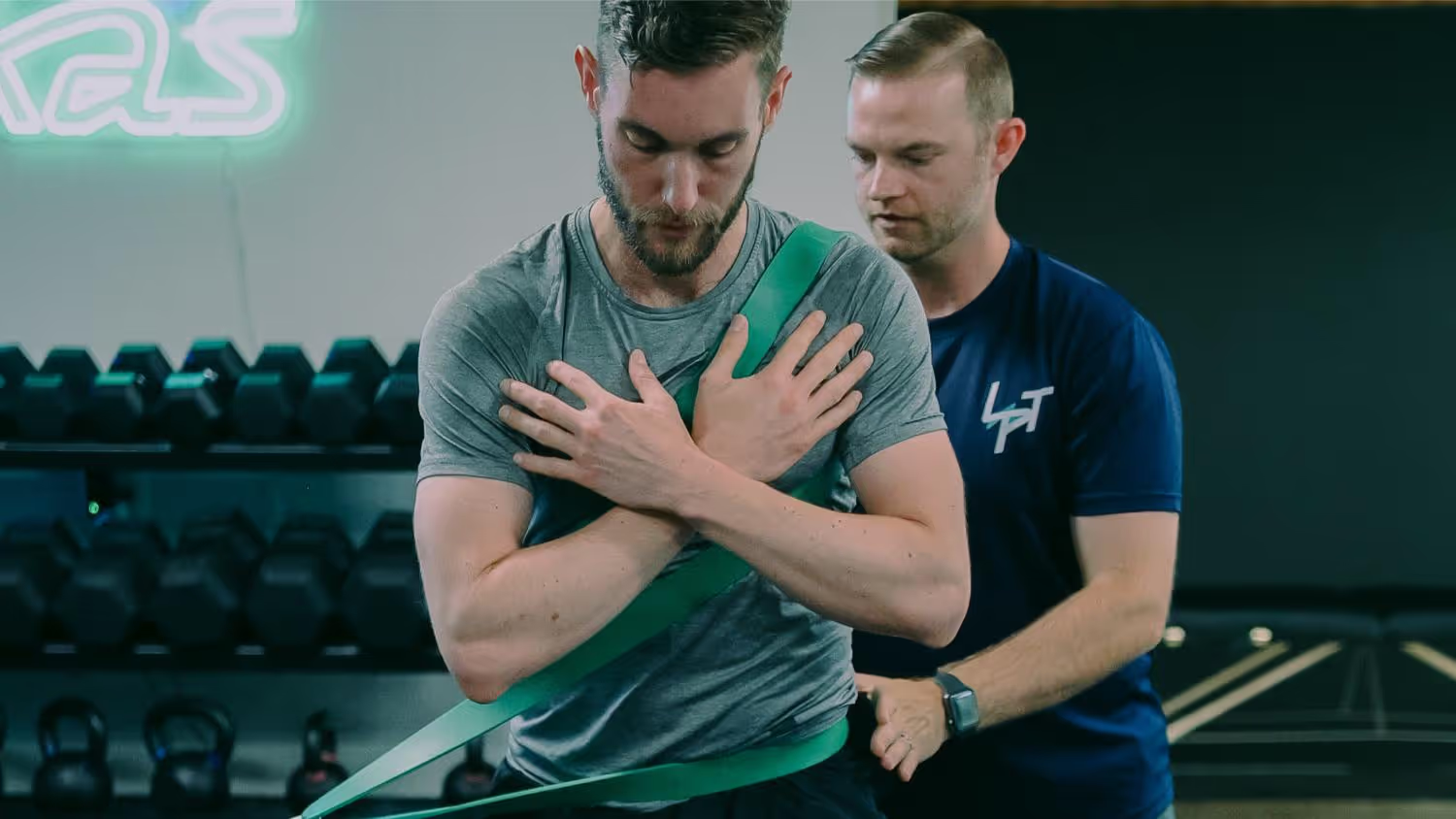
IT band syndrome care at Lakás means one-on-one time with your physical therapist, a full movement screen, and a running-specific look at your stride mechanics. The findings shape your plan — so we're addressing the root cause, not just the ache on the outside of your knee.
Rest Quiets the Pain for a Week. Then You Run Again and It's Back.
Every Run Ends With the Same Sharp Pull
It starts fine. A few miles in, that familiar pull hits the outside of your knee, sharp enough to change your stride. You slow down, finish shorter than planned, and tell yourself next run will be different. It usually isn't.
You've Cut Back Mileage, Not the Cause
Fewer miles means fewer flare-ups, but the same hip weakness and stride pattern are still there. The moment you build volume back up, the same load hits the same tissue and the pain shows up right on schedule.
Foam Rolling Buys a Few More Miles, Not a Fix
Rolling, stretching, and taping can quiet things down for a run or two. None of it changes the hip and glute mechanics driving the friction in the first place, so the relief never lasts much past the next long run.
Why We Look at Your Hip and Stride, Not Just Your Knee
Most IT band programs stop at stretching the band itself, which offers little real change. We start with a movement and strength assessment, then layer in a running-specific mechanics review to find where your hip control and stride are breaking down under load.
.avif)

.avif)
Who Comes to Lakás PT for IT Band Syndrome
Runners dealing with IT band syndrome come to us after rest, rolling, and stretching have only bought temporary relief. We also work with runners increasing mileage who want to get ahead of it before it becomes a recurring problem, and runners returning from a flare-up who want to make sure the underlying hip and stride issues are actually addressed this time.
Runners with recurring outer knee pain that returns every training cycle
Runners whose IT band pain shows up at the same mileage point every run
Runners building mileage who want to get ahead of hip and stride issues
Runners returning from a flare-up who want the root cause addressed
Runners who've tried rest, rolling, and stretching without lasting relief
Athletes from other sports whose training includes regular running
Runners with noticeable hip drop or stride breakdown late in a run
Anyone whose outer knee pain is dictating how far or often they run
From First Call to Full Performance: Our 3-Step Plan
Step 1: Listen
We start by listening, a full evaluation to understand your injury history, your goals, and what getting back to full strength actually means to you.
Step 2: Load
Once the plan is set, we get to work: restoring function, building strength, and progressing your rehab at a pace that earns real results.
Step 3: Live
High-level PT blends into performance training so you return ready, stronger, more confident, and more resilient than you were before.
What Sacramento Runners Are Saying About Lakás PT
See what runners say about their IT band recovery at Lakás PT.


Frequently Asked Questions
Have questions about IT band syndrome care at Lakás? Here is what we hear most.
What causes IT band syndrome in runners?
IT band syndrome is usually driven by hip abductor weakness and stride mechanics that overload the tissue on the outside of the knee, not the band itself. We assess your strength and running mechanics to find the specific pattern driving your pain and build a plan around it.
Will rest alone fix my IT band pain?
Rest can quiet the pain temporarily, but it doesn't change the hip weakness or stride pattern causing the friction. Most runners find the pain returns once mileage builds back up unless the underlying mechanics are addressed directly.
How is your approach different from stretching the IT band?
Stretching the band itself offers limited lasting change since the band isn't the true source of the problem. We focus on hip and glute strength and stride mechanics instead, which is what typically drives real, lasting improvement for runners.
How many sessions will I need for IT band syndrome?
It depends on how long you've had symptoms and what your assessment finds. Some runners need a handful of sessions to correct a specific strength or mechanics issue; others work with us over a longer return-to-running program with a clear timeline.
Can I keep running while I address IT band syndrome?
Often yes, with some adjustments to volume or intensity while we work on the underlying cause. We'll build a plan that keeps you moving where possible instead of requiring a full stop, and adjust based on how your symptoms respond.
Still have questions?
Still have questions? We are happy to talk it through.
Ready to Find Out Why Your IT Band Keeps Flaring Up?
Book a free phone consult and tell us what keeps cutting your runs short.